Finding a book
All My Books has five different ways to get to a book, and they suit different kinds of half-memory.
1. Instant search
The search field above the book list filters as you type. Type “dun” and the list is down to the Dune books before you finish the word. Clear the field to get the whole collection back.
2. Quick filter
The quick filter on the toolbar narrows the collection by the value of one field — subject, year, publisher, location, binding, language, series and so on. Pick a value from the drop-down and only books with that value stay visible.
The button next to the field chooses which field the filter works on. (In older versions this was a right-click; it is a normal button now.)
3. Filters by mark
The menu answers the standing questions in one click:
| Show All | Remove all filtering. |
| Show Wishlist | Books you want but do not have. |
| Show Unread / Show Read | By reading state. |
| Show Loans / Show Overdue | Books that are out, and books that are late. |
| Show Duplicate Titles | Finds accidental double entries. |
| Show New | Added in the last 7, 30 or 60 days. |
| Personal marks | Your own flag fields. |
Hold Shift while choosing a quick filter to invert it. Shift + Show Unread shows the books you have read.
4. Sorting and grouping
orders the list by title, original title, author, date added, book number, rating, personal rating, price, year, pages or date read. Hold Shift as you choose to reverse the direction, or click a column header in the list.
turns the flat list into a tree: by first letter, author, author's last name, translator, editor, illustrator, binding, location, subject, year, publisher, language, series, read date, add date, file type, author-and-series, personal marks or any custom field. Browsing “everything by this author, in series order” is then a matter of opening one branch.
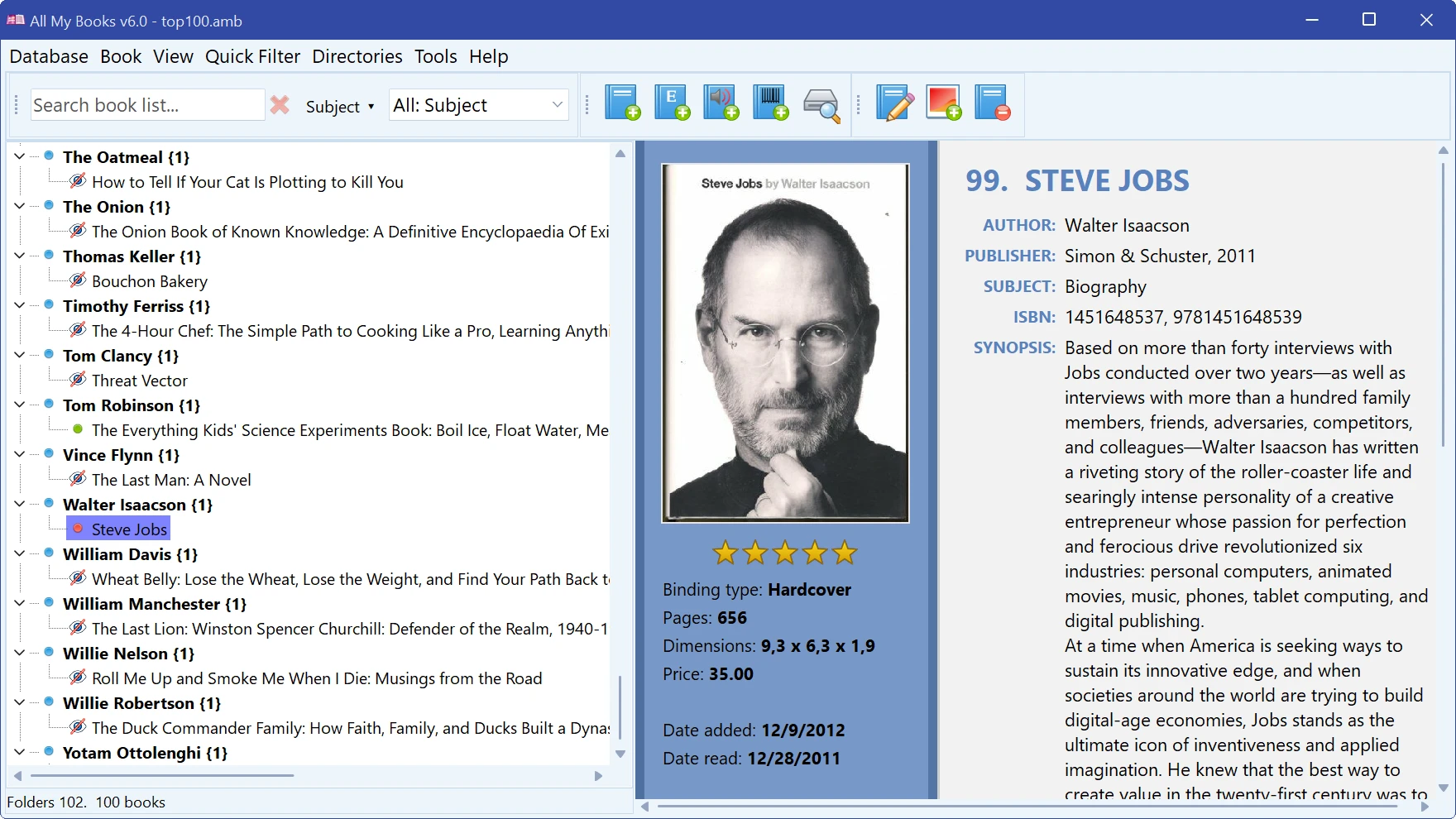
Many values on the book card are links — year, subject, rating, author. Clicking one offers to sort or filter the whole collection by that value, which is the fastest way to get from “this book” to “everything like it”.
5. Advanced search
(F3) is for everything else.
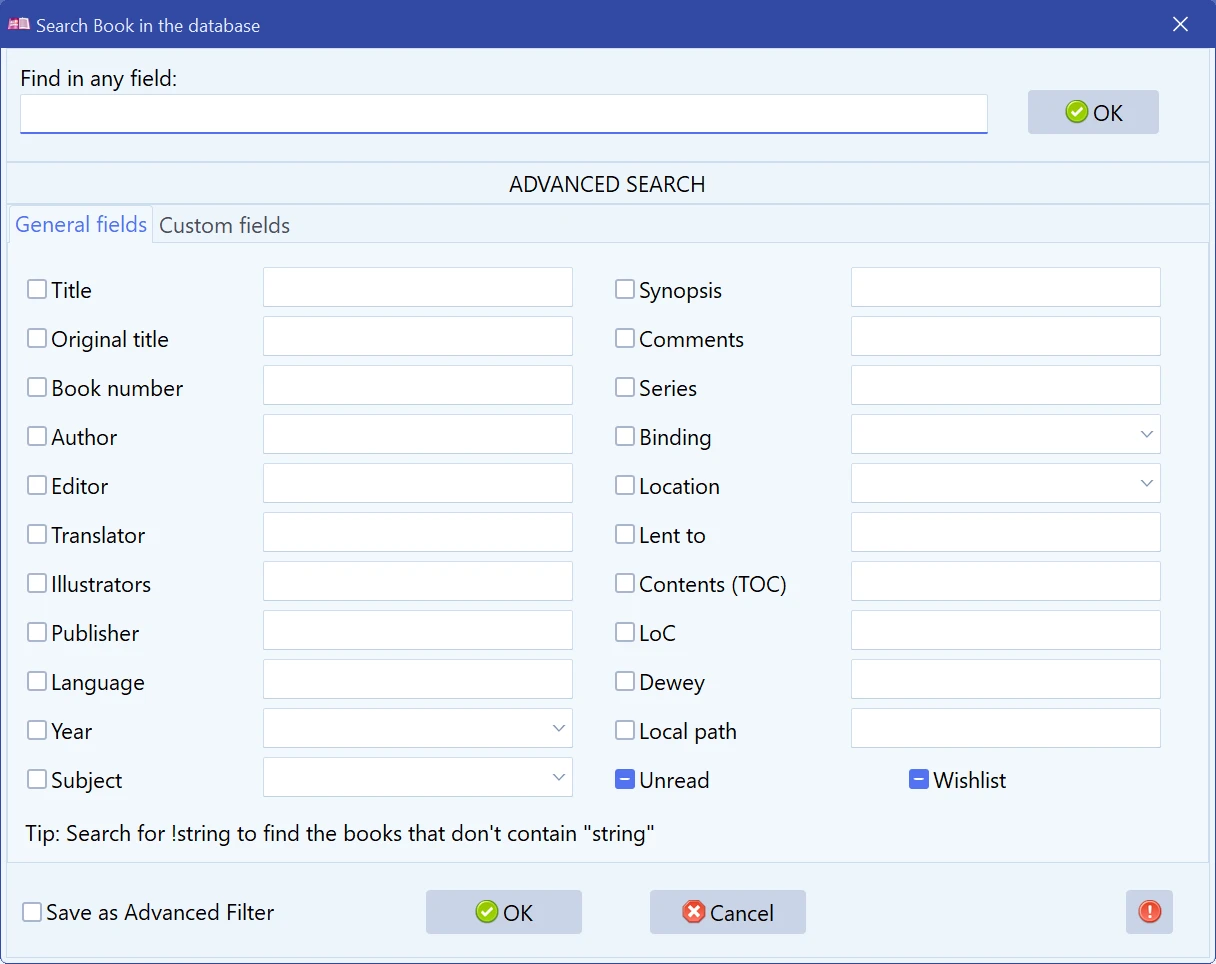
- Find in any field — one box, searched against everything: title, author, synopsis, comments, table of contents, publisher, series and the rest. Use it when you only remember a phrase.
- By field — tick the fields you want and fill them in: title, original title, author, translator, editor, illustrator, publisher, series, year, language, binding, subject, book number, location, local path, synopsis, comments, contents, loaned to, LoC, Dewey, wishlist and unread. Several criteria at once are combined.
- Custom fields have their own tab.
Searching for !text finds the books that do
not contain that text — the way to list, say, every book with no
publisher filled in.
Saved filters
A search you keep repeating can be kept. Tick Save as Advanced Filter in the search dialog, give it a name, and it appears under — “unread hardbacks bought this year” is then one click away.
Searching for a specific ISBN in the collection you already have is (F9) — useful in a bookshop for checking whether you already own a copy.
Free to try. Catalog up to 100 books at no cost, forever.