Awesome!
"After a 30 minute good tryout of the free version... I had to buy it. WOW!!! this software blows Calibre our of the water. I get everything I need here. Awesome book mamagement and transfer to other devices and easy as pie. The interface is so attractive. Thank you!"
Eneida Paulo
How to Catalog Your Books at Home

A home library is only useful if you can answer three questions quickly: Do I already own this? Where is it on the shelf? Who borrowed it? Spreadsheets work for a few dozen titles. Past that, typing every field by hand becomes the bottleneck. Below is a practical way to catalog your books with All My Books for Windows — paper books first, with ebooks and audiobooks in the same collection if you want.
Excel vs a book catalog
An Excel list is fine for a starter shelf. It falls short when you need covers, series order, ISBN lookup, loan reminders, or a search that is not “Ctrl+F across one column.” All My Books is built for a personal / home library (not multi-copy public library inventory). You can still Tools → Import from → Import from MS Excel… (CSV works well) if you already have a spreadsheet.
Step 1. Install and clear the demo catalog
Download and install All My Books. The first launch may show sample books — select all (Ctrl+A) and press Delete if you want an empty catalog.
Step 2. Add a printed book
Choose Book → Add… or press Ins. The book card opens with many fields; you do not fill them all by hand.
- Type part of the title in Original title and press Enter to search online databases.
- Or search by author, or enter / scan an ISBN (USB barcode scanners work well for stacks of paperbacks).
- Pick the right edition from the results (covers help), then click OK — or Next book to save and open a blank card for the next title.
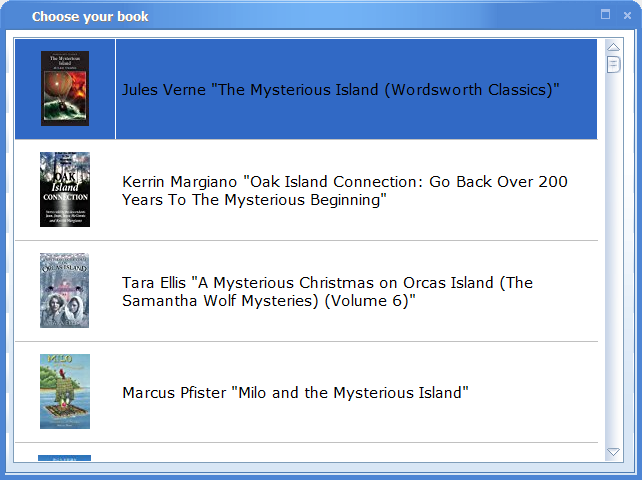
Switch the online source with the small triangle next to the title field if the first database does not find your edition.

Step 3. Record where the book lives
Fill the Location field while the book is still in your hands — for example Living room / Shelf 2 or Box B / attic. Later, search or filter by location instead of walking the shelves.
Step 4. Search, filter, and browse
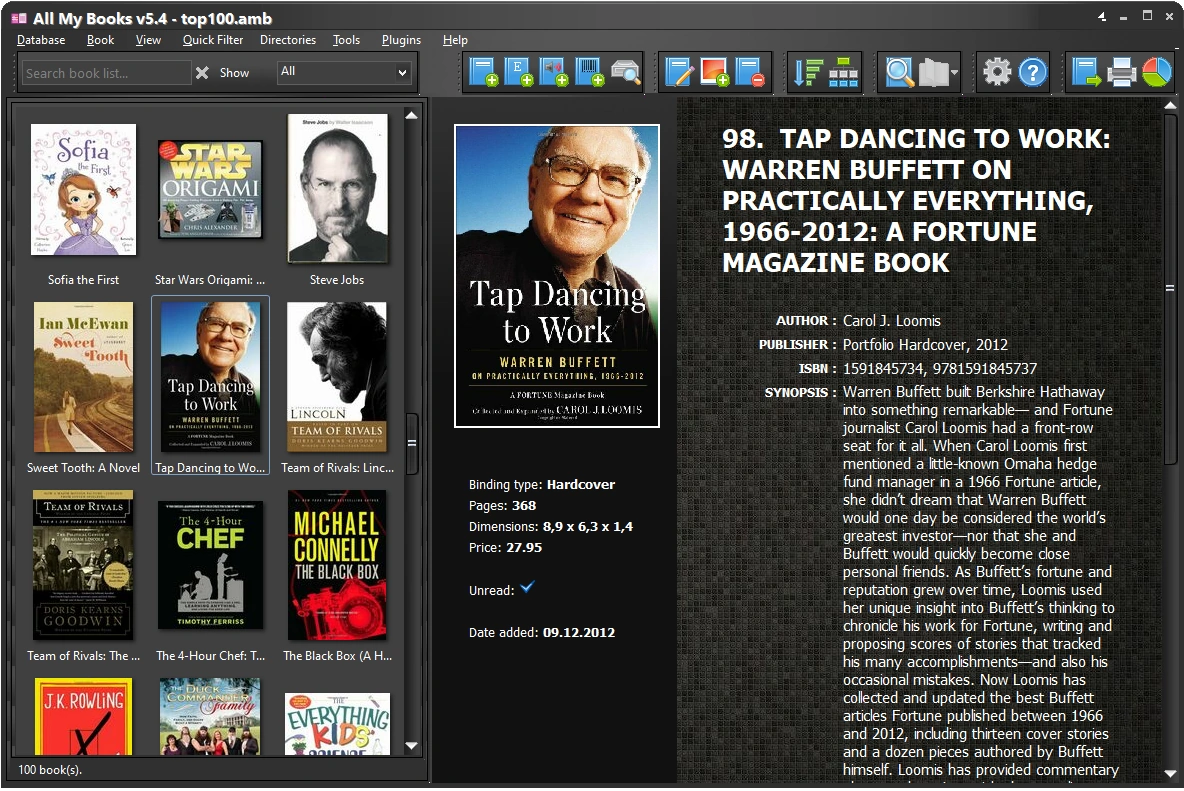
Use Tools → Find book… (or F3) to search by title, author, genre, series, notes, and more. Open Tools → Statistics for a quick picture of the collection. Prefer covers? Switch to Virtual shelf or other view modes under View.
Step 5. Track reading and loans
Mark books as read and keep notes so you remember them years later — details in keeping track of the books you read. When you lend a book, mark it as lent (F12); Tools → Loan history shows who has what and who forgot to return it.
Tip: put a short reaction in the Comments field after you finish a book. Future-you will thank present-you.
Ebooks and audiobooks in the same catalog
Paper is only half of many libraries. To scan folders of EPUB/PDF/MOBI and keep files where they are (instead of copying them into a new library folder), follow how to organize ebooks. If the ebooks already live in Calibre, import that library instead of scanning again. Audiobooks can sit in the same catalog so one search covers everything you own.
Quick FAQ
Do I need a barcode scanner?
No. Title search is enough. A scanner is optional speed for large paper collections.
Can I catalog ebooks without moving files?
Yes — scan the folders; All My Books indexes them in place. See the ebook guide linked above.
Is this for a school or public library with many copies?
It is aimed at home use. Tracking many identical copies is awkward (you would duplicate cards with Ctrl+D). For a personal library it fits well.
Can I print or share the catalog?
Yes — export to PDF or print book lists/cards from the program.
Start cataloging
Install the trial, add ten books from one shelf (title or ISBN), set locations, and try finding one by author. If that is faster than guessing which shelf it was on, keep going shelf by shelf.
What our customers say
Step-by-step: build a home book catalog with covers, shelf locations, reading log, and loan tracking.